Headeradd

Tuesday, July 15, 2014

HAKU PATASI - Newar Community Typical Female Costumes.


Haku Patasi
The word 'Haku Patasi' is composed of two Newar or Nepal Bhasa words: 'Haku' meaning 'Black' and 'Patasi' meaning 'Sari'. It is one of the traditional costumes of Nepali culture and the representative of Newars' ethical dressings. It is made of local household cotton grown in different places surrounding Kathmandu valley. Thus, Haku patasi is a black sari with red or green borders decorated on the sides, worn by Nepali and Newar women living in and around Kathmandu valley. The color of borders on Haku Patasi differs as per the regions within the valley; i.e red borders denote to Haku Patasi from Bhaktapur, while green borders are signs from Kathmandu.
Newa maicha (girl) on HAKUPATASI - 
a typical Newar costume.
Haku patasi (black sari) bears a very different and unique identity than regular saris and dhotis worn by Nepali females. Haku patasi is usually heavier, and always black in color, sari with red border lined on the sides. Haku Patasi is worn without wearing a petticoat (skirt worn inside the sari).
This sari is worn from the waist to the calves and does not cover ankles as generally other saris do. Newar ladies and Newar girls living in Kathmandu valley and its vicinity, wrap Haku Patasi around their waist and tie Patuka just like a belt.

Embroidered Patu

Patuka, usually called 'Jani' in Nepa Bhasa (Newar language), is a white long piece of cloth which is wrapped around the waist for holding the sari in the form of a belt. Usually, patuka is 12 hands (about 18 feet) long. Patuka, is now available in different designs embroidered to enhance the Haku patasi. 

A full-sleeved blouse tied at four different corners usually called 'Chaubandi cholo' in Nepali and 'Thana tagu kapoya naun or Putu naun' in Nepal bhasa (Newar language)  or ' a cloth made of handwoven threads' is worn as top above the Patasi. Over the cholo, 'a shawl made of Dhaka' or 'Haku Gacha'  is worn. People from Bhaktapur put on a white shawl and on the other hand, people from  Lalitpur wear green shawl; showing a variation in culture within the same culture.

Different types of jewelry are also worn along with Haku Patasi. Some of the jewelry is Loonswan - a gold plated ornament worn in the center of the head with designs all over with an image of Lord Ganesh in the middle.
Kalli,Bangale, Loonswan&Nyapu sikha, Tayo , Kilip and Makansi (Earing)

Newar women wear a gold necklace known as Tayo Ghau and a golden pendant with stones joined to the necklace with the Haku Patasi. Kilip is worn at the back of the head that holds together the hair.Teek Ma is another elaborate piece worn on the head. Teek Ma has many small strings attached to a point and is worn on the side.
Besides these, some of the common ornaments are Patachin shikha (simple gold necklace), Company shikha (a necklace made of coins), and Bhimpuma (a necklace made of coral). Along with all these ornaments, the earrings worn is u-shaped and is called Makansi. Gold rings in figure and bangles are worn in hands. And Kalli (usually made of silver) is also worn around the ankles


Importance of Haku Patasi in Newar Culture

The color of Haku Patasi itself represents a cultural and historical association with Newar traditions. The bottom red lines of the sari are the sources of power givings to the mighty Goddess Mahakali, as said in Newar folklore. Thus, Haku Patasi is not only a dress, but it also symbolizes the power of women in society. 

However, with modernization and western influence, the trend of wearing Haku patasi has reasonably degraded in daily life. But at the same time, its significance nowadays has increased its value among the community people. Haku Patasi has become the most important part of every Newar jatras, celebrations, and functions. Newar women are accustomed to wearing Haku patasi during specific festive such as Gai Jatra, Buranjya, etc. inclusive of the performance of some death ceremonies. Newar women, girls, and even female kids are dressed in Haku Patasi with the red handmade cotton shoes, called Chatti.

How to wear Haku Patasi?

Putting on Haku patasi is similar to wearing as other saris; except for that it is worn without a need of petticoats. Haku patasi is wrapped around the upper hip of the body, as done in wearing other saris.
Here are the steps of putting on Haku patasi:
1. Wrap Haku Patasi around the waist.

2. Make knots from the end of Patasi by folding the parts where the left and right sides of the sari meet.


3. Make as many plates (mujaa) as necessary as per the length of the Patasi, as similar in other saris. More plates are preferable because of the absence of petticoat.


4. Tuck folded plates inside the wrapped part of around the waist, right below the navel.


5. Wrap Jani (Patuka) around the waist to make sure that Patasi does not fall off.


6. The remaining parts of Patasi can be wrapped on top of Jani, or waved off the shoulder by creating a long tail.

Sunday, June 29, 2014

धानसँग जोडिएका पर्व प्रसंग


happy dhau (curd/ yoghurt) baji (beaten rice)day.

हाम्रो मुलुकमा ठाउँअनुसार फरकफरक धान पर्व भए पनि रोपाइँलाई विशेष महत्त्व दिने गरेको पाइन्छ।
नेपालमा युगौंदेखि चलिआएका धार्मिक तथा सांस्कृतिक पर्वहरूमा विभिन्न अन्न प्रयोग गर्ने प्रचलनले विशेष स्थान ओगट्दै आएको छ। ती अन्नमध्ये विशेषत: धान तथा यसको परिकार अधिकांश धार्मिक कार्य, विभिन्न कर्मकाण्ड तथा चाडपर्वमा अत्यावश्यक वस्तुको रूपमा प्रयोग हुँदै आएका छन्। भगवान् तथा पितृप्रति श्रद्धाभावले चढाइने, शुभकार्य तथा साइतमा टीकाको रूपमा लगाइने, भिक्षा दिइने तन्त्रमन्त्र तथा झारफूक कार्यमा साथै अन्य विधामा समेत अति महत्त्व र पवित्र वस्तुको रूपमा प्रयोग गरिन्छ। यस अर्थमा अरू अन्नभन्दा धानको महिमा अपार छ भन्नुमा अतिशयोक्ति नहोला। यसर्थ यस लेखमा विभिन्‍न धार्मिक कार्य तथा पर्वहरूमा धान तथा यसको परिकार चढाउने कार्यलाई निरन्तरता दिइआएका परम्परागत संस्कार र जनजाति विशेषले चलाइआएको संस्कृति साथै रोचक किम्वदन्तीको संम्क्षित विवरण प्रस्तुत गरिएको छ।
धानबालीले राष्ट्रिय अर्थतन्त्रमा विशेष योगदान पुर्‍याउँदै आएको परिप्रेक्षमा २०६२ सालदेखि असार १५ गतेलाई 'राष्ट्रिय धानबाली दिवस' को रूपमा मनाउँदै आएको छ। काठमाडौं उपत्यका तथा पहाडी भेगमा असार १५ लाई 'रोपाइँ पर्व' को रूपमा मनाउने चलन छ। यस पर्वलाई 'मानो रोपेर मुरी फलाउने' अवसरको रूपमा समेत लिने गरिन्छ। ललितपुरमा गाईजात्राको भोलिपल्ट 'दथुसाया मतया' या 'रोपाइँ यात्रा' मनाउने चलन छ। नेवार समुदायमा धार्मिक परम्पराअनुसार सानै उमेरमा गरिने 'इही' (बेलविवाह) तथा 'बारह।' (सूर्यदर्शन/गुफा राख्ने) को शुभअवसरमा आमाले छोरीलाई आत्मीयतासाथ 'सरुवा चामल' (चामल र धानमिश्रित) चढाइने गरिन्छ, जसलाई नेपाल भाषामा 'बा:हँ छुइगु' भनिन्छ। साथै 'कैँता पूजा' (ब्रतवन्ध) मा छोराले 'आमा मलाई भिक्षा देऊ।' भनी दुई हात जोडी माग्दा आमाले ममतापूर्वक भावविह्वल भई छोरालाई चामल भिक्षा दिने चलन अति सान्दर्भिक देखिन्छ।
काठमाडौं उपत्यकाका मगर समुदायले धानको बेर्ना शिरमा लगाई 'भूमि पर्व' मनाउने चलन छ। यस कार्यलाई राम्रो उत्पादनका लागि प्रार्थनास्वरूप भूमिलाई पूजा गरिएको मानी आएको छ।
जुम्लामा धान दाइँ गरेर सफा गरिसकेपछि पहिलो सुप्पा (नाङ्लो) धान चन्दननाथलाई चढाउने र दोस्रो सुप्पा धान छोरीलाई पेवा बढाउन दिने चलन छ। साथै घटस्थापनाको दिन धानको नयाँ बाली काटेर यसलाई चिउरा बनाएर पहिलो देवतालाई चढाउने र त्यसपछि मात्र नयाँ बाली घरमा भित्र्याउने प्रचलन छ। खोटाङमा किराँती समुदायले घैया धान पोलेर 'कुल पूजा' गर्ने चलन छ। रामेछापमा नेपालको लोपोन्मुख अल्पसंख्यक सूचीमा पर्ने 'हायू जाति' मा कुनै पनि धाॢमक कार्य सुरु गर्नुभन्दा पहिले घैयाको चामल चढाउने चलन छ।
तराईमा मनाइने 'छठपर्व' मा पूजा गर्न 'गमडी धान' को चामल उत्तम मानिन्छ भने 'जितिया पर्व' मा पितृहरूलाई चढाउने गमडी धानकै चिउरा चाहिन्छ। साथै छठपर्वको अवसरमा छठीमाईलाई चढाउन चामलको पिठोबाट तयार गरिने 'ठेकुवा रोटी' अनिवार्य छ। तराईमा छठपर्वका प्रसाद बनाउन 'साठी धान' र विवाहको विधि पूरा गर्न 'लालका बसमती धान' नभई हुँदैन। पहाडी भेगमा विवाहोत्सवमा साइपावामा राखी पठाइने मिठाईमध्ये चामलको पिठोबाट तयार गरिने कसराको लड्डु अनिवार्य छ। धार्मिक परम्पराअनुसार विवाहको शुभअवसरमा दुलहीले जग्गेमा बालिएको आगोमा 'लावा' (धानको एक परिकार) छर्ने चलन छ। उक्त लावालाई उन्नतिको चिनो साथै दैविक (अग्नि) साक्षीका रूपमा लिने गरिन्छ। साथै अन्य पवित्र व्रतमा लावाको माला बनाएर भगवान्लाई चढाउने चलन छ। बैतडीमा धार्मिक परम्पराअनुसार प्राचीन 'शाली धान' को लावा तुलस विवाह र अन्य धार्मिक पूजासमेत प्रयोग गरिन्छ।
भक्तपुरको राजा आनन्द मल्लको पालामा १३०१ सालतिर लडाइँ भएको समयमा शत्रुपक्षका मानिसले गाडेको धान सडेर त्यसबाट 'हकुवा चामल' बनेको पाइएको र यसै समयदेखि हकुवा चामल खाने चलन थालिएको विश्वास गरिन्छ। काठमाडौं उत्पयकामा ज्यापू समुदायले धान रोप्ने समयमा खेतका लागि पानी मागी दिने काम भ्यागुताले गर्दै आएको छ भन्ने आस्थाअनुरूप 'गुन्हु पुन्छी' अथवा 'क्वाँटी पुन्ही' (जनै पूर्णिमा) को दिन भ्यागुतोलाई भात खान दिने चलन छ। साथै धानखेतमा हरियो रङको भ्यागुता देखा परे धान नपाकेको र खैरो रंगको भ्यागुता देखा परे धान पाक्न थाल्यो भन्ने विश्वास गरिन्छ।
मुगुको चैन गाउँमा राष्ट्रिय धान दिवसको अवसरमा गरिने रोपाइँ कार्यक्रममा धानखेतमा स्थानीय सांस्कृतिक 'पुल्ती नाच' प्रदर्शन गर्ने चलन छ। इलाममा रक्षाबन्धन (जनैपूर्णिमा) पछि कृष्ण जन्माष्टमीसम्म भदौरे जात्रा मनाउने चलन छ भने यसको प्रमुख जात्रा नै 'रोपाइँ जात्रा' लाई मानिन्छ। यस जात्रामा हातमा धानको बेर्ना लिएका रोपाहार र कोदालो बोकेका बाउसेहरू धान रोपेको नाटक गर्दै नाच्दै नौमती बाजाका साथमा सहर परिक्रमा गर्ने चलन रहिआएको छ।
नुवाकोटमा सबैतिर धान रोपाइँ सकिएपछि त्यहाँका वासिन्दाले स्थानीय व्यक्तिलाई डोली (ताम्दान) मा राखी छत्रले ओडाई चारजनाले बोकेर भैरव मन्दिरको नजिकको धान खेत घुमाउने चलन राजा जयप्रकाश मल्लको पालादेखि चलिआएको कथन छ।
नेवार समुदायको केही जातिमा शवयात्राको सिलसिलामा यात्रा गरिने बाटोलाई पवित्र पार्न धान तथा लावा छर्दै शव अगाडि बढाउने परम्परा यथावत् छ। परापूर्वकालमा स्वर्गका राजा इन्द्रले मान्छेको भेषमा काठमाडौं आई किसानलाई नसोधी बगैंचाबाट परिजात फूल चोरेको आरोपमा उनलाई बाँधेर राखे। आफ्नो छोरा फुत्काउने इन्द्रकी आमा दागिं (वसुन्धरा) काठमाडौं आई किसानसँग 'के चाहिन्छ माग' भनिन्। किसानले 'धान पकाउन कुहिरो' मागे र उनले पूरा गरिन् भन्‍ने रोचक किंवदन्ती छ।

Saturday, June 21, 2014

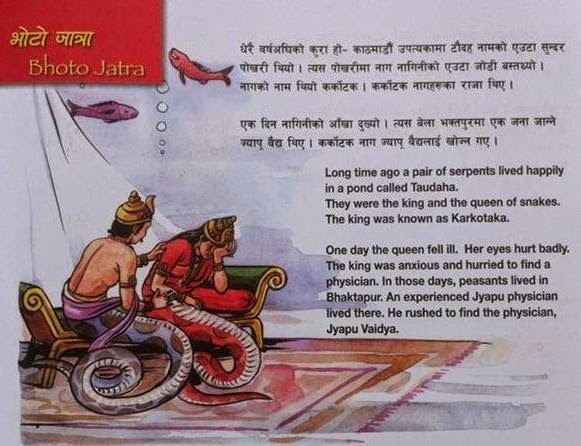
भोटो जात्रा को बारेमा किंम्वदन्ती


पाटनमा वरदेव राजाको शासनकालमा कर्कोटक नागराजा को श्रीमतीको 
आँखा दुखेछ । अनेक उपाय गर्दा पनि निको नभएपछि, भक्तपुरको नामी बुढा 
बैद्यलाई भेट्न भक्तपुर गएछ । मानव रुपी नागराजले बाटोमा बुढा बैद्यलाई भेटेछ । मानव रुपी नागराजले बुढा बैद्यलाई लिएर टौदहमा पुगेपछि, नाग रुप लिएर, बुढोलाई लिई टौदह भित्र पसेछ । भित्र सुवर्णमय ठुलो दरबार रहेछ । बुढाले चारपाँच दिन सम्म औषधी गरी निको बनाईदिएपछि, नागराजले खुसी हँदै औषधी गरेबापत के चाहिन्छ माग भन्दा, बुढा बैद्यले त्यसबेला नागराजले लगाएको मणीजडित भोटो मागेछ । नागराजले मुसु हाँसी भोटो फुकाली दिएछ र अन्य धन सम्पत्ति दिई बिदा गरेछ ।
बुढाले घर फर्केपछि, त्यहि भोटो लगाएर खेतमा काम गर्न गएछ । दिउँसो गर्मी भएपछि, भोटो फुकाली खेतको आलीमा राखि काम गर्न थालेछ । एकजना भुतले भोटो देखेर भोटो लिई भागेछ अनि बुढोले भेटाउन नसक्ने गरी गायब भएछ । समय बित्दै जाँदा श्री रातो मच्छिन्द्रनाथको रथ जात्रा हुँदा श्री मच्छिन्द्रनाथको रथ जावलाखेलमा रहेको बेला, त्यो भोटो चोर भुत मच्छिन्द्रनाथको जात्रा हेर्न अन्य भुतहरुसँग आएछ । उनीहरु अदृष्य भएर त्यहाँ जात्रा हेर्न आएका भक्तजनहरुको सरसामानहरु चोरी गरीरहेकाथिए । नागराजापनि मानवरुप लिएर जात्रा हेरिरहेका थिए । बुढो बैद्यपनि जात्रा हेर्न आएछ । भक्तजनहरुको सामान हराएकोले ललितपुरको एकजना बज्राचार्यले मन्त्रगरी दिग्बन्धन गरेपछि, अदृष्य चोर भुतहरु कहीँ जान नसकेर देखिन थाले । यही मौकामा भोटो लाएको भुतलाई बुढाले देखेर समात्न खोज्दा दुबै बीच झगडा भएछ । मणीमय भोटोको प्रभावले भुत बलियो भई बुढालाई कस्त दिएछ । बुढाले गुहार मागेछ । मानवरुपी नागराजले त्यो देखेर रिसले भुतलाई टाउकोमा एक मुड्की बजाएछ, अनी भुत भुईँमा ढलेछ र उठेर क्षमा मागेछ । नागराजले मैले स्वईच्छाले दिएको भोटो बुढोलाई फिर्ता गर भनेछ । भुतले त्यो भोटो बुढालाई लायक नभएको अनि आफ्नो पनि लायक नभएकोले मच्छिन्द्रनाथलाई चढाउन अनुरोध गरेछ । यो कुरामा सबैको चित्तबुझेकोले श्री मच्छिन्द्रनाथलाई चढाएछ । यो समाचार सुनेर तत्कालिन राजा वरदेवपनि त्यहाँ आएछन् । नागराजले नागलोकको उक्त भोटो बर्षेनि जावलाखेलको जात्रामा चारै दिशाबाट तिन पल्ट देखाउन आदेश दिएछ । प्रथम पल्ट देव, मनुष्य, नागलोकलाई; दोष्रो पल्ट काठमाडौँ, ललितपुर, भक्तपुर, टौदह अनि बन्धुदत्त गुरु नरेन्द्रदेव राजा रथंचक्र भरिया र कर्कोटक नागराजा ; तेश्रो पल्टको भुत बुढा बैद्य मन्त्र गर्ने बज्राचार्य सहित यक्ष लोकलाई देखाउनु भनेछ ।
यो कुरामा सबैलाई गराइ साक्षी राखी नागराज अलप भएछ त्यसबेला देखि भोटो देखाउने जात्रा प्रचलनमा रहिआएको हो भन्ने किंम्बदन्ती छ ।
मानिसहरुमा यो भोटो कस्को हो भनि भोटो देखाएको भन्ने गलत धारणा रहिआएको छ । भोटो कस्को हो भनि देखाएको नभई कर्कोटक नागराजाको आदेश अनुसार नागलोकको बस्त्र सबैलाई देखाउन उक्त भोटो जात्रा प्रचलनमा आएको हो । उक्त भोटो दर्शन गर्नाले अष्ट महाभयबाट मुक्त हुन्छ भन्ने किंम्बदन्ती पाइन्छ


श्री रातो मच्छिन्द्रनाथको बारेमा वंशावली अनुसार यस प्रकारको किम्बदन्ती पाइन्छ । 

पहिले भक्तपुरमा गुणकामदेव भन्ने एक सदाचारी राजा थिए । उनको पालामा स्यालको रुप लिएर आएको नारायणलाई आफ्नो वचन अनुसार आफ्नो एक्ली छोरी विवाह गरीदिए पश्चात दाइजो पु¥याउन गएका भरीयाहरुबाट उक्त स्याल, स्याल नभई नारायण भन्ने कुरा थाहापाई नारायणलाई भेट्न गई, नेपालमा धानबालीको बरदान मागेछ । नारायणले तथास्तु भनि बरदान दिएछ । जनताहरुले धानबाली काटी ल्याएपछि, गोडेर हेर्दा चामल नभएको पाए । जनताहरुको उजुरी नारायणलाई राजाले सुनाउँदा, नारायणले धानबाली हुर्काउने, बढाउने काम मात्र आफ्नो भएको र धान भित्र चामल हाल्ने काम आफ्नो गुरु मच्छिन्द्रनाथको भएको बताए । उहाँको ३२ अंश मध्य एक अंश पृथ्वीमा कामुनी क्षेत्रमा यक्षनीको गर्भमा जन्म लिने छ, तब उहाँलाई नेपालमा ल्याउनु पर्छ । तपाईको जीवनकालमा संभव भएन तपाईको छाराको पालामा नेपालमा ल्याउन म मद्दत् गर्नेछु भनि सम्झाएर फिर्ता पठाएछ ।
गुनकामदेवको छोरा नरेन्द्रदेवको पालामा नारायणले आफुले दिएको वचन पालन गर्न गोरखनाथको अवतार लिई नेपाल आएर नवनागको आशन गरी, बसेकाले नेपालमा जलबृष्टि भएन । जलबृष्टि नभएपछि देशमा हाहाकार मच्यो । नरेन्द्रदेवले गुरु शान्तिकर सँग सल्लाह मागी गोरखनाथको कारण जलबृष्टि नभएको कुरा थाहापायो । गुरुको सल्लाह बमोजिम मच्छिन्द्रनाथलाई नेपालमा ल्याएपछि मात्र मच्छिन्द्रनाथ शिष्य गोरखनाथ गुरुको दर्शन गर्न आशनबाट उठ्ने कुरा थाहापाएपछि कामुनी क्षेत्रमा गई मच्छिन्द्रनाथ नेपालमा ल्याउने कुरामा सहमत भए । नरेन्द्रदेव, शान्तिकर शिष्य बन्धुदत्त, रथचक्र किसान, सगुन लिई नेपालबाट कामुनी क्षेत्रको बाटोतिर लागेछ । बाटोमा कर्काेटक नागराजलाई मानव रुप लिई बाटो छेक्ने गरी सुतेको अवस्थामा भेतेछ । राजाले नागराज भनि थाहा नपाएर लात्तीले हान्दा, भयंकर रुप लिई रिसाएका नागराजलाई गुरुले आफ्नो बुद्धिद्वारा सुक्ष्म रुप लिन लगाई आफ्नो वशमा पारेर सबै बेलिबिस्तार लगाएपछि नागराजलेपनि मच्छिन्द्रनाथ नेपालमा ल्याउन उनिहरुको साथ दिन्छु भनि सँगै हिँडेछ ।
जाँदाजाँदै उनिहरु शीला नदिमा पुगेछ । नदि तर्न पुल नभएकोले नागराज ठुलो रुप लिएर पुल बनिदिएपछि उनिहरुले पुल पार गरेछ । हिँड्डै जाँडा कामुनी देश नजिक पुगेछ । बन्धुदत्त गुरुले नागराजालाई सुक्ष्म रुप लिन लगाई शशी राजाको पेट दुख्ने गराउनु भनेपछि नागराजले सो अनुसार गरेपछि शशी राजाको पेट दुखेछ । राजाले अनेक उपाय गरेपनि रोग निको नभई झन्झन् बल्झँदै गएछ । राजालाई यस्तो बिपत्ती आईलागेको बेला बन्धुदत्तगुरु, राजा र किसान दरबारमा उपस्थित भए । गुरुले चार दिन सम्म औषधी गरी नागराजलाई शरीरबाट पन्छाई दिएपछि रोग शान्त भएछ । शशी राजाले खुसी भएर के चाहिन्छ माग भन्दा उनिहरुले राजाको ५०० छोरा मध्य कान्छो छोरा मच्छिन्द्रनाथ मागेछ । यो कुरा सुनेर शशी राजा माया यक्षनी र अन्य यक्षहरुले उनिहरुलाई गाली गरी प्राण बचाउन चाहन्छौ भने यहाँबाट गईहाल भनेछ । राजा, गुरु र किसान निराश भएर पहिले कै स्थानमा फर्केछ ।


त्यसपछि बन्धुदत्त गुरुले जगत्मोहनी नागराज मार्पmत बगैँचामा खेलिरहेको मच्छिन्द्रनाथलाई लगायो । मोहनीको प्रभावले मच्छिन्द्रनाथ नेपाल जाने भनेर दिनरात कराई बसेछ । यो देखेर राजाले कडा पहरा राखेछ भने आमा माया यक्षनी छोराको कोठाको मूलद्वारमा कपाल फिजाएर सुतेछ । मोहनीको प्रभावले मच्छिन्द्रनाथको मन अस्थिर भई कोठाबाट निस्कन खोज्दा सुतेको आमालाई देखेर एकएक केस पन्छाई ननाग्ने प्रयास गरी आफ्नो शरीर त्यही त्याग गरी भंम्रर रुप लिई बेगले गुरुले साधन गरेको कलशमा पसेछ । नरेन्द्रदेव राजाले हतपत कलशमा पालाले छोपी दिएछ । उता छोराको हालत देखी यक्षहरु आकाशमार्गबाट उडेर आई कलश खोसेर भंम्रर रुपी मच्छिन्द्रनाथको प्राण शरीरमा प्रतिस्थापन गरी जिवित बनाएछ ।
उता गुरु, राजा र भरीया अर्को पीठमा गई ४ जना भैरव आह्वान गरी भैरवहरु प्रकट भएपछि सम्पूर्ण वृत्तान्त सुनाई ४ जना भैरवहरु, कर्कोटक नागराजा, गुरु, राजा र भरीया कामुनी देशमा गई भैरवहरुले यक्ष राजालाई आफ्नो वचन पालन गर्ने भए गर नभए सास्ती खाई मर्नुपर्नेछ भनि तर्साएछ । यक्ष राजा भैरवहरुको भयंकर रुप देखी तर्सीएर विलाप गर्दै आफ्नो छोरालाई सूम्पिएर पठाएछ । राजा, गुरु, भरीया र नागराज र मच्छिन्द्रनाथ बोकेका ४ जना भैरवले क्वदुवाल भन्ने ठाउँमा पुगेपछि विश्राम लिएछ ।
एकछिनको विश्रामपछि जानुप¥यो भनि मच्छिन्द्रनाथको खट उचाली हेर्दा गह्रौ भएर भैरवहरुले खट उचाल्न सकेनन् । यो देखेर गुरुले विचार गरी हेर्दा खटमा ४ पर्वतको भार राखी यक्षहरुले मचिछन्द्रनाथलाई फिर्ता लान्छु भनी अदृश्य भईरहेको थाहापाएछ । गुरु, राजा एकान्त गूफा भित्र पसी बाहिर भरीया र नागराजलाई पहरा राखी दिग्बन्धन गरी कलशमा मच्छिन्द्नाथलाई आह्वान गरेछ । म्िरच्छन्द्रनाथ २ पल्ट सम्म भंम्रर रुप लिई आई कलशमा पसेछ । २ पल्ट सम्म पनि राजाले कलशमा बिर्को नलगाएपछि गुरुले कुहिनोले हिर्काएपछि राजा निद्राबाट जागी तेश्रो पल्ट कलशमा बिर्को लगाईदिएछ । यसरी कलशमा साधना गरीएको मच्छिन्द्रनाथलाई भैरवहरुबाट बोकाएर बुंगमती पुगेपछि भैरवहरु बिदा भए । यसरी मच्छिन्द्रनाथ नेपाल आइपुगेको थाहापाई गोरखनाथ नवनागको आशनबाट उठी दर्शन गरेर गएपछि नागहरु फक्का भई नेपालमा १२ वर्षपछि जलवृष्टि भएछ ।


बुंंगमतीबाट मच्छिन्द्रनाथलाई ल्याई इती भन्ने स्थानमा पुगेपछि सबैले विश्राम गरे । त्यसपछि राजा, गुरु र भरीयामा मच्छिन्द्रनाथ आ–आफ्नो देशमा लानुपर्छ भन्ने विवाद भएपछि ललितपुरको जेष्ठ नागरीकबाट जो पैmसला हुन्छ, त्यही अनुसार गर्ने भन्ने कुरामा सहमत भए । यो कुरा ललितपुरका तत्कालिन राजा वरदेवले थाहापाई सबैभन्दा जेष्ठ बुढालाई नुन, मिश्रीत् दही ख्वाएर मच्छिन्द्रनाथ ललितपुरमा राख्नुपर्छ भनि भन्न आदेश दिएछ । नुनको सोझो गर्न बुढाले ७ वटा ओखल माथि बसेर ललितपुरमा मच्छिन्द्रनाथ राख्नुपर्छ भनि निर्णय सुनाएपछि ओखलबाट खसेर बुढाको मृत्यु भएछ । यसरी भक्तपुरका नरेन्द्रदेव राजा काठमाडौँ बन्धुदत्त र ललितपुरका रथचक्र भरीया मिलि कामुनी क्षेत्रबाट ल्याईएको मच्द्धिन्द्रनाथ ललितपुरमा स्थापना गर्ने निर्णय भएपछि कलश गर्भमा राखी म्हेपिबाट ल्याएको माटोले मूर्ति बनाई तहबाहाल र बुंगमतीमा मन्दिर बनाई साईत अनुसार पालैपालो राख्ने निर्णय भए अनुसार हाल सम्मपनि त्यसरी नै राखिन्छ । पहिले पाटनमा ७ वटा रथ जात्रा भएकोमा सबैलाई एउटैमा साधन गर्ने कार्य हुँदा जटाधारी लोकेश्वरले नमानी आकाशवाणीबाट आफ्नो रथ जात्रा नमिताउन आज्ञा दिएपछि पाटनमा मच्छिन्द्रनाथ र मिननाथको (जटाधारी लोकेश्वर ) को रथ जात्रा गर्ने प्रचलनमा आएको हो भन्ने किंबदन्ती वंशावलीमा पाइन्छ ।

Monday, June 9, 2014

Story about Namo buddha.

The Ancient Story of Namo Buddha
A long time in the past, many immeasurable eons ago, our teacher the perfect Buddha was practicing on the path of learning. Below is the story of how he was overcome with compassion when he saw a tigress tormented by starvation and offered his body to her without a moment’s hesitation.
In the distant past, there lived in this world a king named Great Charioteer (Shingta Chenpo) who ruled over a small kingdom of some five thousand subjects. Due to the king’s accumulation of merit, all his subjects enjoyed happiness and well being; rains came at the right time while crops and livestock flourished. The king had three sons: the oldest was named Great Sound (Dra Chenpo), the middle Great Deity (Lha Chenpo), and the youngest Great Being (Semchen Chenpo). Powerful in the martial arts and radiating confidence, the two elder sons always helped the king in governing the kingdom. From his earliest years, the youngest son, Great Being, was very bright and endowed with spontaneous kindness and compassion. He gave freely and generously to others as if to his only child.
One day when the weather was fine, the king along with his queen, sons, and ministers left the town for a relaxing time in the country. The king and queen rode upon an elephant while the sons, ministers, and retinue were mounted on beautiful horses. After half a day’s ride, they arrived at a place of thickly wooded forests resonant with birdsong while nearby blossomed a tapestry of flowers in rich variety. The king was pleased with the scenery and ordered a large encampment to be prepared for everyone’s enjoyment. The servants immediately unpacked everything, set up tents, and laid out a hearth of stones for cooking. Soon the ground was covered with tents as clouds billowed in the sky above. The servants bustled about, preparing a variety of foods and offering tea and liquor to everyone. Then the young people began to sing, dance, and play, transforming the encampment into a celestial realm. The king, queen, and ministers watched the entertainment while enjoying an eighteen course meal accompanied by wine and sake.
Then the three princes, in the full flush of their youth, picked up their bows and arrows and headed for the forest. As they walked along, they noticed a den in the dense woods. They crept up to it and saw inside a tigress sleeping beside her cubs. Great Sound and Great Deity laid arrows on their bows, making ready to kill the tigress, but Great Being stopped his brothers, saying that killing was completely wrong. When he looked into the cave again, Great Being noticed that the tigress was not able to move, for she had just given birth and she also feared that if she left to hunt for food, another animal might harm her cubs. Tormented by hunger, she lay on the ground unable even to lift her head. Great Being was moved to tears with compassion that arose from the depths of his heart. He asked his brothers, “What
kind of food would save the tigress and her cubs?” They responded, “This kind of red Indian tiger eats the warm flesh and blood of a recent kill. So if you want to help her and the cubs, you must find flesh and blood that are fresh.”
Great Being thought for a moment: “It’s indeed true that to save the tigress and her cubs, warm flesh and blood are needed. But then I’d have to kill another living being, and that would mean killing one to save another. What else can I do?” He thought for a long while but did not find a solution. Then his brothers said, “We came out here to have a good time. It’s pointless to worry about this tigress and her cubs. It’s time to return to our parents.” And so they left.
As he followed his brothers back to the encampment, Great Being thought, “For a long time, I have been cycling in samsara, wasting countless lives, sometimes due to excessive desire, sometimes aversion, and sometimes ignorance. I have rarely met such an opportunity to accumulate merit. What real use is this body if not for the Dharma?” Finally he decided, “This time I must be truly generous.”
Before he had gone very far with his brothers, he said to them, “Brothers, you two go on ahead. I have something to take care of and will catch up with you soon.”
He took the path to the tigress’s den quickening his pace. When he found the collapsed tigress, she was so exhausted
that she could not even open her mouth. Great Living Being reached out his hand to touch her face, but she was so weakened she could not even bare her fangs. So the prince sharpened a splinter from a nearby tree and cut his body to draw blood, which he allowed the tigress to lick. Not long after, she opened her jaws and stood up. With a roar, she pounced on the prince and devoured him.
The two brothers waited a long time, but the youngest prince did not come, so they set out to find him. Reflecting on what he had said earlier, they had no doubt that he had returned to the tigress’s den. When they arrived and looked inside, there was nothing left of their brother but blood, bones, nails, and bits of clothing. The tigress had consumed him. At this sight, Great Sound and Great Deity immediately lost consciousness; it was a long time before they recovered their senses. The two gathered up the pieces of their brother’s clothing and, sobbing with deep sadness, set out for their parents’ encampment.
During this time, the queen was taking a nap and in a dream saw three doves flying high in the sky. As they fluttered around, a hawk struck and carried off the smallest one. Waking in terror, the queen immediately related her dream to the king. He replied, “Hearing your story, I believe the three doves are our three sons. The youngest of them, carried off by the hawk, is my most beloved son. I’m sure that something dreadful has happened to him.” So saying, the king immediately sent out servants to look everywhere for his son.
Soon, the two princes arrived and the king asked, “Did something bad happen to my beloved son? Do you have any news?” Choked with sadness, the two were unable to speak or even breathe for a while. Finally, they sighed deeply and told their parents that the tigress had eaten Great Being. Upon hearing this terrible news, the queen fainted right away. The king too was overwhelmed with immense sadness and tormented by sorrow. After a long while and with profound sighs, the two princes, the king, and the queen rushed to the place where the youngest prince had died. When they arrived at the opening of the den, what met their eyes were the bones and rivulets of blood left behind by the tigress. The queen recoiled, overcome with sobbing, and did not recover for a long while.
Meanwhile, the prince had been reborn as Great Courage (Nyingtob Chenpo). He wondered, “What did I do to be reborn here in the celestial realm of Tushita?” Through his divine eye, he thoroughly examined the five realms. Great Courage saw that, gathered around the bone fragments he had left behind, were his parents and two brothers. They were sunk in lamentation and completely miserable. He thought, “My parents are experiencing such unhappiness, it could threaten their very lives. To lighten their spirits, I’ll go talk to them.” He descended from space to the lofty sky and spoke words of encouragement to comfort his parents: “I’m the prince Great Being. After giving my body in generosity to the starving tigress, I was reborn in the celestial realm of Tushita.” With tears in their eyes, the king and queen said, “Son, you who are like our very heart, offering your body to the tigress was certainly most praiseworthy. But whom can we tell of our suffering in missing you?”
Great Courage replied, “Please do not be unhappy. The end of birth is disintegration, and the end of gathering is separation. No one can transcend this for it is the nature of things. It is the same for everyone. If you perform evil actions, you will fall into the hell realms; if you perform virtuous actions, you will be reborn in the higher realms. Therefore, diligently pursue virtue. Make aspiration prayers, and in the next life we will definitely meet in a celestial realm.” After a few more words, he disappeared. The king and queen became a little happier and made the commitment to pursue virtuous activity. They created a small casket covered with seven kinds of jewels in which they laid the bones of their son and a stupa was built over the place in which it was buried.

Wednesday, June 4, 2014

Happy Sasthi Nakha- The birthday of Kumar.


Sasthi Nakha falls on the sixth day of the bright half of the month of Jetha(MAY/JUN). This festival is said to have been observed to mark the birthday of Kumar, the Hindu deity of war and one of the sons of Lord Shiva, to worship on his birthday as a mark of gratitude for fighting a battle with the demons and helping the Gods regain their kingdom.

The faithful celebrate Sasthi Nakha by visiting Kumar”s temple in the southern part of Kathmandu. It is one of the main festivals to be observed by the native inhabitants of the Panauti Valley. On this day especially the Newars of the Panauti and Kathmandu Valley prepare a typically Nepali dish made of maas, black lentil, and mugi, kidney beans, kasu, small peas ground, bodi beans and offer it to Kumar. They take these dishes and enjoy themselves. Next day Kumar seated on a peacock beginning from Hanumandhoka Durbar Square is a chariot is carried by men in accompaniment with musical instruments played by a nominate party of men along the streets of Kathmandu, Kumar, being a war-lord, his conveyance has been a peacock, a bird of slow and cautious motion, quick change and flights all the qualities needed in an advancing army. The festival also marks the end of Diwali, a festival when the Nepalese worship their family deities annually. Those families which do not or cannot observe the Deewali for vivid reasons, worship the family deities by way of apologizing and also Kumar on this day. Another special feature of this festival is the cleaning of the wells and springs from which people, before the supply of filtered drinking water through galvanized pipes and taps, used to drink water.

Newa Community celebrates Sasthi Nakha, a traditional festival of the Newas, by cleaning water sources just before the start of monsoon. Newa Cultural experts say that usually, the Newa community celebrates Sasthi Nakha by cleaning water sources like wells, ponds, and stone-spouts. And at the end of it with a grand Newari feast of six different varieties of Newari food including Wo (fried lintel bread) and Chatamari (Nepali special pizza).

This festival is celebrated on the birthday of Kartikeya, son of Lord Shiva and Parvati, to welcome the rainy season. Houses, courtyards, streets, and allies are also clean during this day. It is believed that cleaning such water sources will bring in the rain for the good cultivation of crops. It is also believed that the Sasthi Nakha is celebrated to welcome monsoon as this is the ideal time to set up rice seedbeds.

Sasthi Nakha
A Newar festival, Sasthi Nakha is celebrated at the onset of the rainy season. Newars celebrate it by worshipping Kartikeya or Kumar, son of Lord Shiva and Parvati, by preparing a small feast including traditional Newar dishes called Wo and Chatamari, and most importantly, cleaning the nearby water resources. Sasthi Nakha is also the last day for performing annual offerings to the ancestral or guardian deities amongst the Newar community.

The word “sasthi” was modified from the Sanskrit word “Shashthi” meaning sixth and “nakha” in Newar language, or Nepal Bhasha means festival. Thus the name Sasthi Nakha was given because it is celebrated on the sixth day of the bright fortnight in the month of Jyestha in the Bikram Sambat calendar. It is also known as Kumar Shashthi.
“It’s a day to worship “Pikhalakhu.” “Pikha” means outside and “lakhu” means the rivers nearby,”. Pikhalakhu is a small circle or a mandap drawn outside each household of the Newar community. The community also regards Pikhalakhu as the place of Kumar. The cleaning up of wells, ponds, and stone spouts on this particular day, marking it as a festival, has great cultural importance in the Newar community.
Environmentalists, on the other hand, have realized that this festival links itself with social and environmental awareness issues. UN-Habitat has mentioned Sasthi Nakha in its brochure as “to be supported nationally in an effort to both preserve water sources and promote rainwater harvesting.”

Friday, May 2, 2014

AKSHAYAY TRITIYA:

The literal meaning of ‘Akshay’ is one that is imperishable, hence Akshay Tritiya is that ‘Thithi’ which is eternal in Hindu almanac by nature. This day is believed to bring all round success and good luck. One of the four most sacred and significant tithis for the Hindus is the Akhateej or Akshay Tritiya. It falls on the third lunar day of Shukla Paksha in the month of Vaisakha. This year this eternal tithi falls on 2nd May 2014.
On this propitious day, people should take a resolve to leave behind all the negative aspects of their personality and adopt positive virtues such as kindness, sympathy, brotherhood and love. Akshay Tritiya is the best day for all kinds of auspicious occasions right from marriage and house warming ceremonies to starting a new business venture. This is the “Swayam Siddha” Muhurtha. According to the legend, any kind of venture that is initiated on the favourable day of Akshay Tritiya, tends to grow big and successful.

As a part of the ritual of this day, people actively participate in organizing a pooja at home and worship the Almighty to attain a contented life. Fasts are observed and ‘homas’ are performed to appease Vishnu. It is believed that a person who does charity in any form on this day is blessed by God. Generally, people give salt, rice, clarified butter, fruits, tamarind, sugar, water pot, umbrella and clothes in charity. Most of the people buy gold on this day under the notion that it would grow and help them lead a prosperous life. Businessmen worship Lord Ganesha and Goddess Lakshmi as they perform the opening ceremony to start a new account book. This is the day when all kinds of ‘Japa’, ‘Tapa’ (meditation), Kirtan (chanting hymns), Gyan (wisdom) and ‘Daan’ (donation) provide imperishable results. Go all out to appear Lord Vishnu and enjoy life.

Importance of “Akshay Tritiya Tithi

According to the Hindu analysis of time or ‘Kaal’, there are four ‘Swayamsiddha’ tithi or most auspicious Muhurtha - Chaitra Shukla Pratipada (Gudipadwa), Akshay Tritiya, Dussehra and Deepavali.This tithi of Akshay Tritiya marks the beginning of Satya Yuga.This is the only day of the year when the holy feet of the deity of Shree Bankebihariji temple in Vrindavan can be seen as ‘Darshana’.“Nar-Narayan” were incarnated on this auspicious tithi.It is the day when Lord Parshuramji took birth.This is the day when Haygriva descended on earth.

Tuesday, April 29, 2014

Happy mum"s day-the world strongest person.

Ma(n) yagu khwa swaegu: Honoring Mothers 

The last day of the dark fortnight, the new-moon day, is called Ma(n) ya khwa: swaegu, literally "looking at mother's face." This, like a later parallel day for fathers , involves all Kathmandu Valley Hindus and Buddhists. People whose mother has died more than one year previously and who are thus beyond the first year's period of mourning and commemorative ceremonies go, if at all possible, to join other Nepalese at a pilgrimage site, Mata Tirtha, which is two adjoining ponds about six miles to the southwest of Kathmandu. They do a commemorative ceremony, a sofa sraddha , with, for well-to-do farming and upper-level thar s, assistance from their family priest. An offering of food is given to their family Brahman as a special offering, a dana , for the mother. If unable to go to Mata Tirtha, people will bathe and make their offerings at a tirtha at the river in Bhaktapur itself.

Those whose mothers are living return to their mother's home, to "see their mother's face." The mother is worshiped as a deity. Men and women, boys and girls, bow their heads to their mother's feet, then wash them, and place offerings of small coins on them. In some thar s the worshipers take some of the water that has been used to wash the feet and drink it as prasada , which, as we have noted in our discussion of cipa , polluted food, dramatically symbolizes the worshiper's dependent and incorporated relationship to the mother and thus her continuing responsibility to them. Children who have left home try to return on this day, bringing with them offerings of sweet-cakes, curds, eggs, and swaga(n) . The mother returns some of these offerings to her children as prasada . If their mother is not living people on this day may offer beaten rice and sweetcakes to the wife of their family purohita . After a series of festivals devoted to dangerous deities this day returns to the household, with its benign deity—here the deified mother. The emphasis again is on the inside of the household, and the reaffirmation of its internal relations against an opposing theme of loss and death.

Monday, April 21, 2014

बज्रवाराही::

Bajra Barahi

नेपाल मन्दिरैमन्दिर भएको देश हो। त्यसमध्ये उपत्यकाको हरेक क्षेत्रको ऐतिहासिक, सांस्कृतिक सम्पदाको अध्ययन गर्दा यहाँ छैटौ, सातौं शताब्दीमा देवदेवीहरूको कल्पना वा प्रभाव परेको मानिएको छ। उपत्यकामा चारवटा वाराही मन्दिरहरू ...See more
बज्रवाराही
नेपाल मन्दिरैमन्दिर भएको देश हो। त्यसमध्ये उपत्यकाको हरेक क्षेत्रको ऐतिहासिक, सांस्कृतिक सम्पदाको अध्ययन गर्दा यहाँ छैटौ, सातौं शताब्दीमा देवदेवीहरूको कल्पना वा प्रभाव परेको मानिएको छ। उपत्यकामा चारवटा वाराही मन्दिरहरू रहेका छन्। उत्तरमा स्वेतवाराही, पर्ूवमा नीलवाराही, पश्चिममा धूमवाराही, दक्षिणमा बज्रवाराही रहेको पाइन्छ। यो पुण्यस्थल ललितपुर जिल्लामा एक हजार पाँचसय मिटर उँचाइमा रहेको चापागाउँ गाविसको वडा नं. ३मा पर्दछ। यस मन्दिरको पर्ूवमा झरुवारासी बडिखेल गाविस, पश्चिममा छम्पी, उत्तरमा धापाखेल दक्षिणमा लेले गाविसभित्र यो क्षेत्र रहेको छ। १८.९९ हेक्टरमा फैलिएको यस जंगल क्षेत्रको करिब बीच भागमा मन्दिर रहेको छ।
प्राकृतिक रूपले अतिसुन्दर र पूण्यभूमिको रूपमा रहेको बज्रवाराहीको सम्बन्धमा- वाराही शब्द ‘बराहको स्त्रीलिङ्गी रूप हो।जसको फरक-फरक महिमा पनि बताइन्छ। कतै अष्ठमातृका गणमा त कतै ब्रम्हायणी माहेश्वरी, कौमारी, वैष्णवी, वाराही, इन्द्रायणी, चामुण्डा, महालक्ष्मीदेवीको रूपमा। वाराहीमा बज्र कहाँबाट थपियो भन्ने प्रश्नको जवाफ- उपत्यकामा नवौं शताब्दीदेखि १२ औं शताब्दीसम्म बज्रयानको प्रभाव अत्यधिक भएको समयमा- वाराहीमा बज्र विशेषण लगाई आरधना गरियो होला भन्न सकिन्छ।
ब्रजयोगीनी देवी र वाराही पनि देवी हुनुले सम्भावना नजीक देखिन्छ। देवी दर्ुगाबाट दैत्यरक्तबीजलाई मार्नका लागि अष्ठमातृकाको सिर्जना गरिएको बताइएको छ। जसको पूजामात्र गर्नाले पनि जीवनमा आइपर्ने बिघ्न, बाधा, भय हट्ने गर्छ सिद्धि प्राप्त हुन्छ। प्रकृतिको वरदानको रूपमा स्थापित भएको महसुस हुने अति सुन्दर निकुन्ज, शितल छहारी- त्यसै छहारीमा कोइलीको सुमधुर स्वर, प्रकृतिको विलक्षण सिर्जनामा मन्दिरमा मानव निर्मित कलात्मक भव्यताले जोसुकैलाई मनमोद विनोद बनाइदिन्छ
जहाँकी देवीको मर्ूर्ति सुरक्षाको लागि राष्ट्रिय संग्राहलय छाउनीमा राखिएको छ। गर्भ गृहमा प्रस्तरको बीचमा वल्लो-पल्लो छेउमा धातुका दर्ुइ मर्ूर्ति कलात्मक रूपले बनाइएको छ। ठीक तल ११ वटा देवीका मर्ूर्तिहरू जसको तलपट्ट िदक्षिणतर्फजल कुण्ड र नजीकै भोगदिने गरिन्छ। बाहिर र भित्र सिंहका आकृति छन् भने प्राङ्गणमा बत्ती बाल्ने पालाहरू छन्। देवीको मन्दिरमा कलात्मक तीन द्वारहरू छन्। मन्दिरमा स्थाइरूपले मर्ूर्ति राखिँदैन। जात्रा सञ्चालन गर्दा मात्र राखिन्छ।
त्यहाँ रहेको जल कुण्डलाई पनि गुहेश्वरीको जलकुण्ड मानिन्छ। नवरात्रीमा उक्त कुण्डबाट जल निकालेर स्नान गर्ने प्रचलन छ। जहाँ काठमा कुँदिएका वाराहीका तीनवटा मर्ूर्ति बँदेलको जस्तो मुख देखिने, विभिन्न हतियार समातेका विभिन्न मुद्रामा देखि आठ बाहु भएका र राँगामाथि चढेको देखिन्छन्। ढोकामा दुवैतिर प्रस्तर सिंह र तीनवटै ढोकाको तोरणमा ब्रम्हायणी, कौमारी, इन्द्रायणी, अष्टमातृका, भैरव, गरुड, नाग, कलशसमेत देखिन्छन्। मन्दिरको जताततै विभिन्न चित्रहरू कुँदेर राखिएका छन्। त्यस्तो अपर्ूवकलाले सजिएको भए पनि उक्त मन्दिरमा गजुर छैन। मन्दिरमा गजुर निश्चित समयभित्र राख्नुपर्ने हुन्छ।
त्यस्तो समय- जुन समयमा चापागाउँवासी कुनै मृतलाशको आधा जलेर आधा भएको अथवा खप्पर पड्की गिदी निस्केको अथवा लुबु निवासीले मर्ुदा जलाइरहेको तथा नौवटै यहाँका मशानघाटमा
आगो बलेको अवस्थामा मात्र गजुर राख्न सकिने भनाइ पाइन्छ। नेपाल संवत् ७८६मा श्री निवास मल्लद्वारा निर्माण गरिएको देवगृहमा राखिने सुनको देवीको मर्ूर्तिमा दाहिने हातले कमलको विजफल, देब्रे हातले माछा अर्को दाहिनी हात भरिएको पात्र, देब्रेहातको साँहिली औँलाले पात्र च्यापेर दलिएको जलबिन्दु मुद्रा देखाइएको छ।
जुन मर्ूर्तिका सबै अङ्गहरू भिन्दाभिन्दै गहनाले सजिएको देखिन्छ। जसको विधिवत् स्थापना चैत्रशुक्ल अष्टमीको दिन गरिएको थियो। यो मर्ूर्ति वि.सं. २०२५ सालमा चोरी भएपछि प्रहरीद्वारा फेला पारी तत्पश्चात् म्युजियममा राखिएको छ। वाराही देवीसँग सम्बन्धित दर्ुइ जात्राहरू मध्ये एउटा मङ्सिर र अर्को चैत्र महिनामा मनाउने प्रचलन छ।
कार्तिक शुक्ल अष्टमी, नवमी र दशमीका दिन सञ्चालन हुन्छ। अष्टमीका दिन चापागाउँका बासिन्दा ६ जना नाइकेसहित आएर विधिपर्ूवक मर्ूर्तिमा पूजा गर्छन्। देवग्रहमा रहेको मर्ूर्तिलाई खटमा राखेर वाराही मन्दिरभित्रको वेदीकामा राखिन्छ। गुठीका तर्फाट पूजा र महादीप बालिन्छ। बोकाको बली दिएपछि देवी अगाडि अष्टकुन्डमा यज्ञ गरी टाउको हवन गरिन्छ। टीका प्रसाद ग्रहण गरी नौवटै मसानघाटको परिक्रमा गर्दा भात छरेर भूत पन्छाउने कार्य हुन्छ। यसरी अष्टमी जात्रा समाप्त भए पनि रातभरि नै चहलपहल हुन्छ।
भोलिपल्ट चापागाउँका वासिन्दाहरू वाराही मन्दिरमा पूजार्-अर्चना गर्न आउँछन्। भने बुकिखलका मानिसहरू बोकासहित पूजार्-अर्चना गर्न बाजागाजासहित आई पूजा र बली दिएपछि मण्डपमा नाइकेहरूलाई बोकाको टाउको छोडी प्रसाद ग्रहण गरी मध्यरातमा देवीको खट उर्ठाई बिनाबाजागाजा सिमलढोकाबाट वखा डबलीमा ल्याएपछि विश्राम हुन्छ। दशमीको दिन देवीलाई गहना लगाई दिएपछि भजन, कर्ीतन गरी डबली, मण्डपमा पूजा थापी साँझसम्ममा बजारमा जात्रा गरी पुनः देवग्रहमा ल्याईन्छ। जात्रासम्पन्न भएपछि कर्माचार्यहरूको नाइकेबाट विर्सजन पूजा हुन्छ। देवीलाई खटमा नै राखेर देवगृहमा पुनर्स्थापना गरिन्छ तर वि.सं. २०४६ सालमा उक्त मर्ूर्ति चोरी भएपछि जात्रा सञ्चालन भएको छैन। उक्त मन्दिरमा चैत्र महिनाको एकादशी, द्वादशी, त्रयोदशी, चतुर्दशी, सिन्दूरजात्रा र समापन जात्रा हुन्छ। मुख्यदिन भने चतुर्दशीको दिन मानिन्छ।
काठमाडौं कालमोचनबाट आएका कान फटाहाहरूद्वारा चैत्र शुक्ल एकादशीको दिन चक्रपूजा हुन्छ। चक्रगुठीबाट पूजा सामग्रीसहित बोकाको समेत व्यवस्था हुन्छ। द्वादशीको दिन देशारहरूको गुठीले-कुमारी पाठीको बलिसहित पूजाविधि सम्पन्न हुन्छ। देवीको परिक्रमा गर्राई जात्रामा भातसमेत छरी भूत-पिशाच पन्छाउने कार्य हुन्छ। त्रयोदशीका दिन शुद्ध हुने कार्य हुन्छ। चतर्ुदशीका दिन देवीलाई देवगृहको मूलचोकमा ल्याई महर्जनहरूबाट सिंगारपटार गरी पूजा गरेपछि र्सवसाधारणबाट पूजा गरेपछि मर्ूर्ति खटमा राखेर बजार परिक्रमा गर्राई देवगृहमा राखिन्छ।
देवीलाई अष्टमण्डपमा राखेर स्नानसमेत गराउने प्रचलन छ। चतुर्दशीको राती बिनावाजागाजा-स्थानीय प्रशासनले समेत पूजा गरेपछि फुस्रो सिन्दूर आपसमा लगाउने कार्य हुन्छ। पूणिर्माको दिन द्योलाहरूबाट भैरवस्थान घुमाई वखाटोलमा पूजा हुन्छ। इखा क्षेत्रपाल हुँदै भन्सार डबलीमा पुर्यारएपछि जात्रा सम्पन्न हुन्छ।
टीका भैरव- जसले सानीआमाबाट सताइएकी केटीको दुःख सुनेर-आफैँले बिहे गरेको प्रशङ्ग, चैत्रपूणिर्मामा-चन्द्र भैरव र छम्पी गणेशको जात्रा, भाद्र चतर्ुर्थीका दिन बुद्ध भगवान्को जात्रा, चैत्र पूणिर्माको दिन काले महादेवको जात्राले पनि उक्त क्षेत्रको सांस्कृतिक पक्षको बारेमा उजागर पारेको छ। बज्रवाराही देवीको जन्मदिन प्रत्येक वर्षो जेठ महिनाको कृष्ण पक्ष दशमीका दिन ब्राहृमणहरूद्वारा पूजा गरी बोकाको बलि दिई सम्पन्न गरिन्छ।
उपत्यकाको दक्षिण भागमा रहेको चापागाउँ साँस्कृति र ऐतिहासिक रूपले महत्वपूर्ण स्थानको रूपमा रहनुको साथै प्राकृतिक स्वरूपले पनि परिपूर्ण रहेको छ। प्राकृतिक स्वरूपले धनी उक्त क्षेत्रमा कागको बास नहुनु, रूखका झरेका पातहरू यथास्थानमा रहनु, हनुमानको अवतार मानिएका बाँदरहरूको पनि श्रापमोचन स्थान हुनु, उक्त स्थानको काठ समेत आस्था र विश्वासका साथ जनताले प्रयोग नगर्नु, हरेक किसिमका वृक्षहरू पाइनु, अनन्त पन्छीहरूको बासस्थान हुनु, चिसोस्थानमा पनि तर्राईको जस्तो घनाजंगल हुनु, दर्ुइ सय वर्षपुराना वृक्षहरू हुनु, काली काठ, विजयशाल मात्र होइन सहदेव र सहदेवी बिरुवाको काठ आफ्नो शरीरमा राख्दा दुबैको मन मिल्नु जस्ता बिरुवा पाइनु यस पूण्यभूमिको लागि सुनमा सुगन्ध थपिनु जस्तै हो

Monday, April 7, 2014

Chaite Dashain and Ramnawami


Chaite Dashain 

Lord Ram Chandra
Chaite Dashain falls generally in the final month, Chaitra, of Bikram Sambat calendar. It is known as Chaite Dashain or Small Dashain. The big Dashain falls in autumn.  

It is almost the last festival in Nepali calendar year. After this festival, we have a new year ahead within few days. This festival has two days of celebration. First day is Ram Navami (The birth day of Lord RamChandra) and second day is Dashami. Some part of Nepal and India, Chaite Dashain is called Chaitra Navaratri.
This festival has same days of importance as the 10 days of Bijaya Dashami even though it is publicly celebrated for 2 days.

Chaite Dashain is celebration of the victory of good over evil. 

When is Ram Nawami and Chaite Dashain

Ram Navami is on Chaitra Sukla Navami according to Hindu lunar calendar. It is on 25 Chaitra 2070 that is on April 8, 2014. Ram Nawami and Chaite Dashain together also known as Sano Dashain (Small Dashain).  Ram Nawami is followed by Chaite Dashain and Chaite Dashain is on April 9, 2014. (Chaitra 26, 2070).

How do we celebrate Chaite Dashain

People keep fasting in the day of Ram Nawami and visit temples of Lord Ram. In Chaite Dashain day Goddess Durga is worshiped and animal sacrifices are made in some temples especially in temples of Durga Bhawani. Number of water buffalos, goats, chicken and ducks are sacrificed in Hanuman Dhoka Durbar Square in Kathmandu and Bhaktapur Durbar square.

This festival is the public holiday in Nepal. People enjoy the day off with their family and friends. People eat good food and invite relatives and loved one for the feast.  

Story Behind the celebrating Chaite Dashain

Ram Nawami is birthday of Lord Ram Chandra and Chaite Dashain is the day when Lord Ram came back to Ayodhaya with his wife Sita, brother Laxman, Hanuman and his military after 14 years of his exile. People of Ayudhya celebrated this day as a festival and this started the trend. 

In Hinduism, Lord Ram is the incarnation of Lord Vishnu. He is known as Maryada Purusottam Ram. He was dutiful and obeying. He was a great king, good husband and a great son. He showed the example of what human should be.
He set an example of a son by accepting his exile for 14 year from his country only to fulfill his father’s promise. He set an example of a caring and loving king, who sent his wife to forest again to satisfy his countrymen.  He was a loving husband who was always loyal to his wife Sita. He did not marry anyone even for the biggest Yagya, Ashwamegh Yagya. He put golden statue of Sita with him to perform the Yagya. (Wife should be present together with the man performing this Yagya.) Ram Chantra is an example of a man. Ramayana is a way of living epic.  

Ravan was the king of Lanka. He was one of the most brilliant persons living in his age. He was an engineer and a scientist. He was the first one to fry aircraft and first one to use bio diesel about 5000 years ago. He had ten heads and could think equally with all his ten heads.  The ten heads signifies, his brilliance, he was ten times brilliant than anyone living those days on the earth. He was believed to be brilliant enough to build a flying device. The aircraft made by Ravan is called Puspak Biman. He was very hard working and brilliant but he was too arrogant. He was not allowing saints and god believing people to perform their worship and started thinking himself as a God. He was very impressed by beauty of Sita and abducted her from the forest and flew her to Lanka in his Puspak Biman. Ram after a long battle killed him and freed Sita. The kingdom was given in the safe hands of Ravan’s brother Bibhisan. 

The victory of lord Ram over Ravan is symbolically regarded as the victory of human being over the ten sense organs, five belonging to knowledge and 5 to the actions of us Human Beings. It is said Ram Chandra worshiped Goddess Durga Bhawani for 9 days before Ravan was killed. Therefore, these 9 days are regarded as worship days and tenth day is the victory day to take Prasad. 

People used to celebrate the big Dashain (Bada Dashain) during this time. But due to the start of summer, people started suffering a lot form health problem due to heavy food they eat during this festival.  Therefore, the same festival is moved to autumn with same celebration

Rama Nawami (Devanāgarī: राम नवमी; IAST: Rāma navamī) is a Hindu festival, celebrating the birth of the god Rama to King Dasharatha and Queen Kausalya in Ayodhya. Rama, the seventh avatar of Vishnu, is the oldest known god having human form. [2][3] [4] The holy day falls in the Shukla Paksha on the Navami, the ninth day of the month of Chaitra in the Hindu calendar. Thus it is also known as Chaitra Masa Suklapaksha Navami, and marks the end of the nine-day Chaitra-Navaratri (Vasanta Navaratri) celebrations. Rama navami is one of the most important Hindu festivals.
At some places the festival lasts the whole nine days of the Navaratri, thus the period is called 'Sri Rama Navaratra'.[5][6] It is marked by continuous recitals, Akhand Paath, mostly of the Ramacharitamanas, organized several days in advance to culminate on this day, with elaborate bhajan, kirtan and distribution of prasad after the puja and aarti. Images of the infant Rama are placed on cradles and rocked by devotees. Community meals are also organized.[7] Since Rama is believed to have been born at noon, temples and family shrines are elaborately decorated and traditional prayers are chanted together by the family in the morning. Also, at temples, special havans are organized, along with Vedic chanting of mantras and offerings of fruits and flowers.Many followers mark this day by vrata (fasting) through the day followed by feasting in the evening, or at the culmination of celebrations.[2][8][9] In South India, in Bhadrachalam the day is also celebrated as the wedding anniversary of Rama and his consort Sita. Sitarama Kalyanam, the ceremonial wedding ceremony of the divine couple is held at temples throughout the south region, with great fanfare and accompanied by group chanting of name of Rama.[10][11]
The important celebrations on this day take place at Ayodhya (Uttar Pradesh) Sita Samahit Sthal (Sitamarhi) (Bihar), Bhadrachalam (Telangana) and Rameswaram (Tamil Nadu), thronged by thousands of devotees. Rathayatras, the chariot processions, also known as Shobha yatras of Rama, Sita, his brother Lakshmana and Hanuman, are taken out at several places,[2][12][13] including Ayodhya where thousands of people take a dip in the sacred river Sarayu.[14] In the epic Ramayana, Dasharatha, the Emperor from Ayodhya, had three wives named Kausalya, Sumitra and Kaikeyi in the Treta Yuga (which follows the Satya Yuga and succeeded by the Dwapara Yuga). Rama is born to Kaushalya, Lakshmana & Shatrughna to Sumitra and Bharata to Kaikeyi. Rama is known as 'Maryada Purushottam' which means an ideal, righteous and a great or a perfect human being, being the best son, brother, husband and father. Rama who takes birth by his own will, on Bhuloka (Earth) when Adharma rules over Dharma. He protects all his devotees by vanquishing the roots of Adharma. Vishnu decided to incarnate, as Rama, to destroy the Asura (person with demonic and evil designs) called Ravana who is a Brahmin king of Lanka. Lord Rama & Lord Krishna are the only gods in Hinduism or Aryan Vedic context that really existed (and some gods are their manifestations or devotees) and all others are mythological figures based on Puranas. Hence the mahamantra: II Hare Rama Hare Rama, Rama Rama Hare Hare II II Hare Krishna Hare Krishna, Krishna Krishna Hare Hare II
HAPPY RAM NAVAMI

Sunday, March 30, 2014

Ghode Jatra and Pahachare

Ghode Jatra and  Pahachare
 Jatra, meaning Horse Parade is organized in Tudikhel in Kathmandu every year. 

Ghode Jatra is organized on no-moon day of Chaitra Sukla Pakshya of Eastern Lunar calendar. This parade is organized and performed by Nepal Army and Police together. This occasion falls about mid March or early April of English Calendar month.  A big horse parade takes place at Tundikhel. 

Newars of Kathmandu celebrate Ghode Jatra for several days.  

This year Ghode Jatra is on Chaitra 16, 2070. That is on March 30, 2014.

Ghode JatraThe idols of the gods of many localities are taken in a procession in their area in Kharpan and small Rath (portable chariots). The community organize big feast at this time.  A demon called 'Gurumumpa' is also propitiated at this time in Tundikhel. Nepal Army at Tundikhel organizes Horse race, cycle race and other completions. Army and police men perform acrobatic shows.  

Idol of Gods Lumadi, Bhadrakali, Kankeshwari and Bhairav are brought to Asan chok during the day time at the main celebration and at night in Tundikhel. This day these Gods meet together every year.
Actually Godhe Jatra Falls within the festival of Pahachare.  

Pahachare is the three-day festival of the Newar community. Pahachare means inviting guests in Newari language. This festival begins every year on the Chaitra Krishna Pakcha Chaturdashi (Krishna Pakshya is second half of a lunar month).

On the occasion, eight goddesses at different Shaktipiths (power centres) including Kankeshwori, Bhadrakaali and Mahankal are said to be activated through tantrik rites.

On the first day, people clean their surroundings and sewage considering it a worship of Lukumahadev. In the morning, they perform Puja and some people sacrifice animals. A feast begins at Ason where palanquins (khat) are dashed against each other beside the Annapurna temple. It is regarded as a symbol of meeting sisters. In the evening, idols of goddesses are taken around the city in a khat.

Ghode Jatra is second day. This day palaquins are placed in Tundikhel. An inebriated horse is also made to run in Patan. People invite their married daughters and sisters home for a grand feast on the second and third days.

This festivals falls at the start of Summer/spring people clean drains and their surroundings to keep themselves away from summer health hazards. 

It is said Ghode Jatra was organized to celebrate the victory over a demon named Tundi who reside over the field known as Tundikhel. Tundi was a big terror for t he people of Kathmandu. When he died people cheered by dancing onto his body with horses. It is believed that galloping of horses on Ghode Jatra at Tundikhel keeps the demon's sprit under the ground. 
It's said, Patan, a district in Kathmandu valley, also has an event on Ghode Jatra at Bal Kumari area. Horses are intoxicated with local beers and drunken men in traditional Newari dress ride on them. People cheer and shout to frighten and enrage the horses until they run fast and throw the men out from their back. People enjoy this occasion.
People say this occasion in Patan was celebrated to give a better show in comparison to Tundikhel's parade. Since those days people of Patan were not able to attain Ghode Jatra in Kathmandu.